
Do you work at height and does the wind pick up? Then a stable working situation can quickly change. On a scaffold or in a mobile elevating work platform, you have less grip and materials react differently. Wind is unpredictable and brings risks, especially the higher you work and the greater its impact becomes. When is it still safe to continue working and up to what wind speed can you use an aerial work platform? In this article, you will read what to look out for in strong winds.
Why working at height becomes risky in strong winds
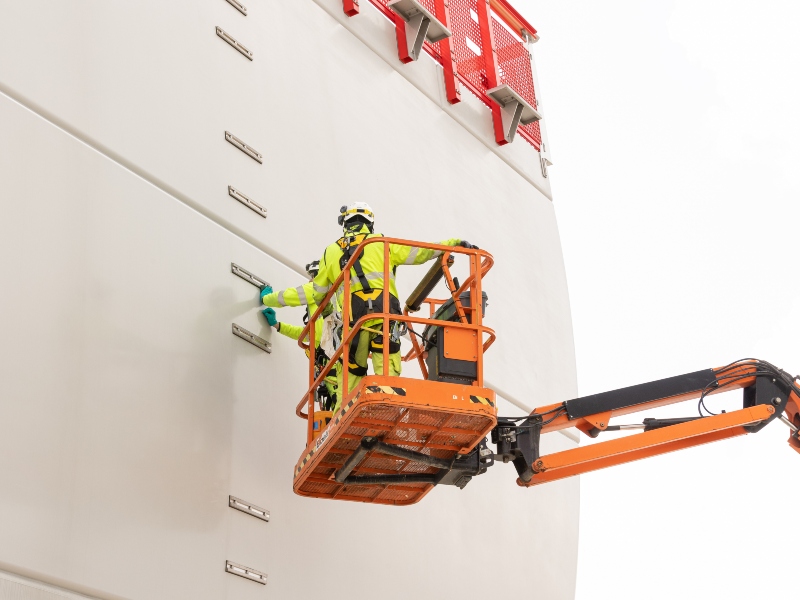
Winds can be treacherous. While buildings and other equipment can block the wind close to the ground, when you are standing on an aerial platform you can feel the force of the wind quite a bit. So deciding whether it is safe to work at height in high winds is not just dependent on the wind force on the ground. The decisive factor here is how hard the wind is blowing at working height.
For work on aerial platforms (AWP), the highest wind speed permitted by law is 12.5 m/s. That is roughly equivalent to a wind force of 6. However, the maximum wind force allowed for aerial platforms varies depending on the model. You can find the maximum wind speed in the manual and on the data plate attached to each aerial platform.
When is it no longer safe to keep working?
Working at height in strong winds requires constant assessment of the situation. Conditions can change quickly, especially on open construction sites or at greater heights.
There are a number of clear signals that indicate you should stop:
- The wind visibly increases or suddenly changes direction.
- You notice your stability decreasing.
- Materials start to move or come loose.
- The limits of your machine are reached.
Are you working with an AWP? Always check the maximum permitted wind load. This differs per type of machine.
Not sure about the situation? Do not take risks and temporarily stop the work.
If in doubt, never take a risk – no matter the wind force.
How do you prepare for working at height?
Good preparation makes the difference. Not all aerial platforms are suitable for both indoor and outdoor use. The data plate on an aerial work platform clearly indicates whether it is only safe for indoor use. In that case, the wind rating would be 0 m/s.
Check beforehand:
- The weather forecast for the entire working day
- Whether materials are properly secured
- Whether you are using the right equipment
Also consider your planning:
- Schedule high-risk activities during calmer moments
- Avoid working at height when strong winds are forecast
Make sure the ground is stable
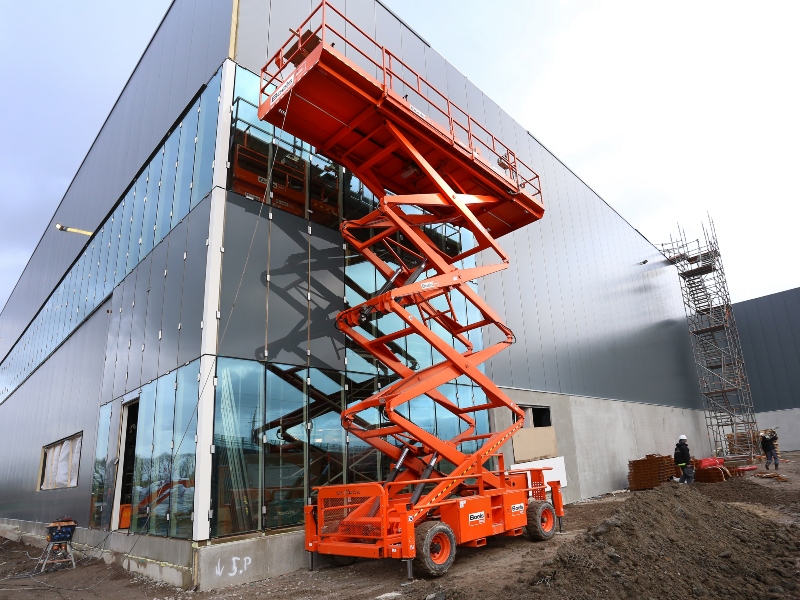
Be extra careful after rain, whether it is a short shower or a longer period of rainfall. Moisture can saturate the ground, increasing the risk of wheels or supports sinking.
Take the following into account:
- Up to 80% of the total weight can rest on a single wheel or support.
- Use steel road plates with self-propelled AWPs (not plastic).
- Always use sufficiently large outrigger pads to increase the machine’s footprint.
Not sure about the ground bearing capacity? First have a soil investigation carried out to check this.
Make sure you are properly trained
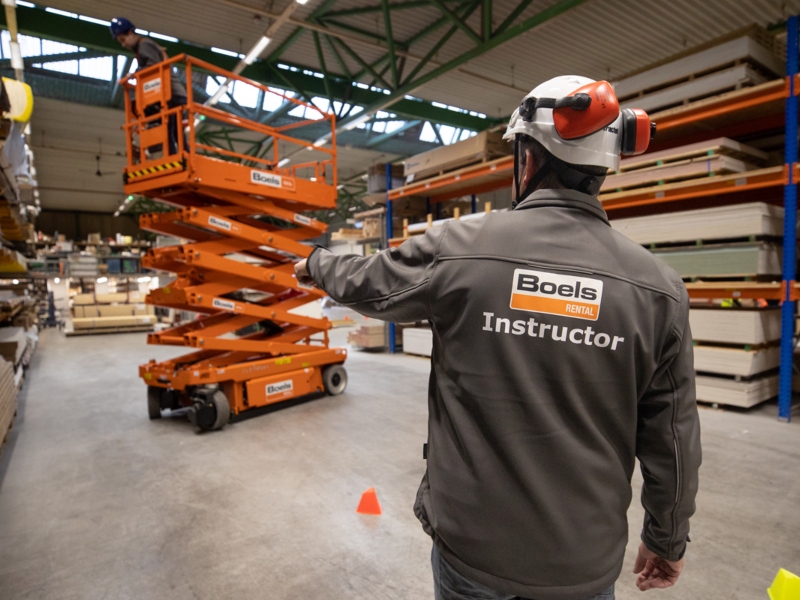
Are you working with an AWP? Then a certificate is mandatory. Even if your certificate is still valid, refresher training remains important. An annual update helps you to work safely and according to the latest guidelines. We previously provided a toolbox training for Unica on safe working with mobile scaffolds.
Interested in a toolbox or training course?
Would you like to refresh your knowledge or train your team? View the full training offer on our service page or contact a specialist.