
You need to keep your project running without delays or additional costs. That requires control over your power supply. Grid congestion makes this increasingly challenging, and the impact is immediately visible in your planning.
For a long time, a reliable power supply on site was a given. That is no longer the case. Make sure your power setup is properly arranged. With temporary solutions such as generators, battery storage systems and solar panels, you prevent downtime and keep your project on schedule. This also strengthens your position in tenders.
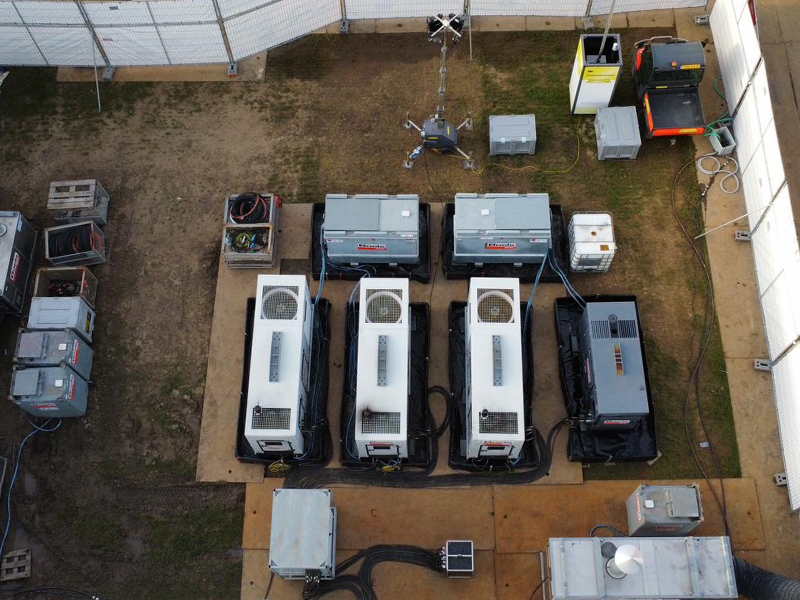
Power when you need it
In winter, you need heating. In summer, cooling. The question is: where does the power come from? This has always been a challenge in remote areas. Today, it also affects urban projects, especially when working on a large scale or with multiple electric machines.
Grid congestion means the electricity network has reached its capacity. Demand continues to grow faster than the grid can handle. At the same time, regulations are becoming stricter. More projects must operate with zero emissions. This increases the need for reliable electric solutions.
Improve your chances in Zero Emission tenders
Zero Emission (ZE) is no longer a trend. It is becoming a deciding factor in awarding contracts. Projects increasingly require emission-free operation and minimal noise levels. By preparing for this, you improve your chances of success. The right temporary power solution helps you avoid delays and reduce risks. One effective approach is peak shaving.
Managing peak demand
Peak shaving allows you to manage peaks in energy consumption. For example, a battery storage system charges during off-peak hours at night, when the grid load is lower. During the day, it automatically supplies additional power when demand increases.
This prevents power shortages during operations. Your project continues without interruption, delays or additional costs.
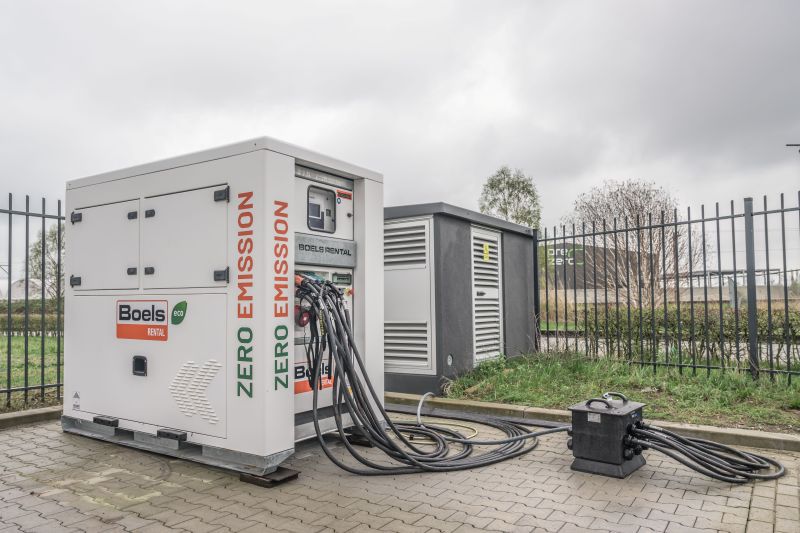
Battery storage as a silent solution
Working in a Zero Emission zone or indoors? Batterypacks are a reliable choice. They supply power without emissions of CO₂, nitrogen or particulate matter. In addition, they operate silently.
Available options include:
- Compact battery systems for hand tools and smaller machines (230 volt, 2000–3000 watt)
- Containerised systems (45, 90 and 318 kVA)
- Capacities ranging from 90 to 422 kWh
- Suitable for both 230 and 400 volt applications
This allows you to select a solution that matches your project requirements.
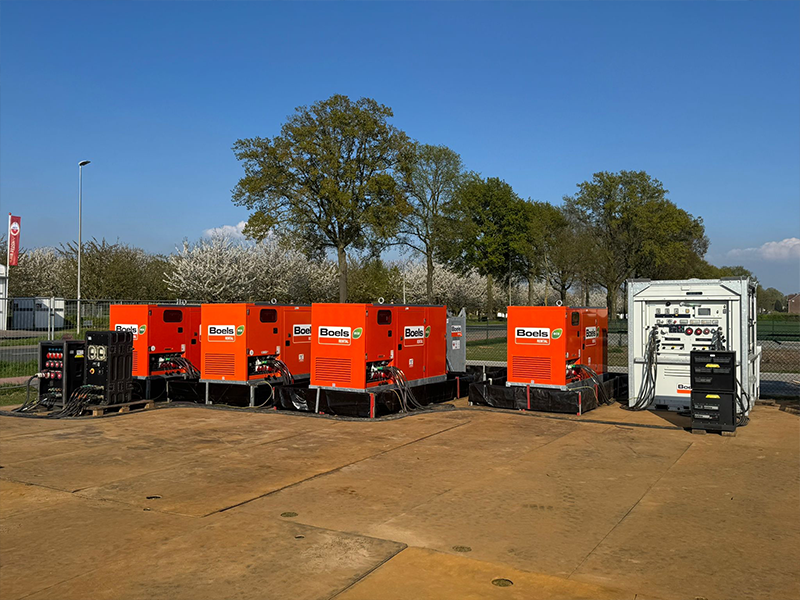
Temporary power: flexible and scalable
There is no need to invest in your own equipment. You can rent temporary power solutions whenever required. Several options are available. Generators remain one of the most commonly used solutions:
- Generators from 2 kVA for small equipment and tools
- Mobile generators that are easy to transport, for example on a trailer
- Generators for medium-sized applications
- Large installations up to 1600 kVA for complete construction sites
For smaller applications, a compact generator is sufficient. Larger projects typically require generators with a 400 volt connection.
Keep in mind that larger installations require sufficient space and may require permits.
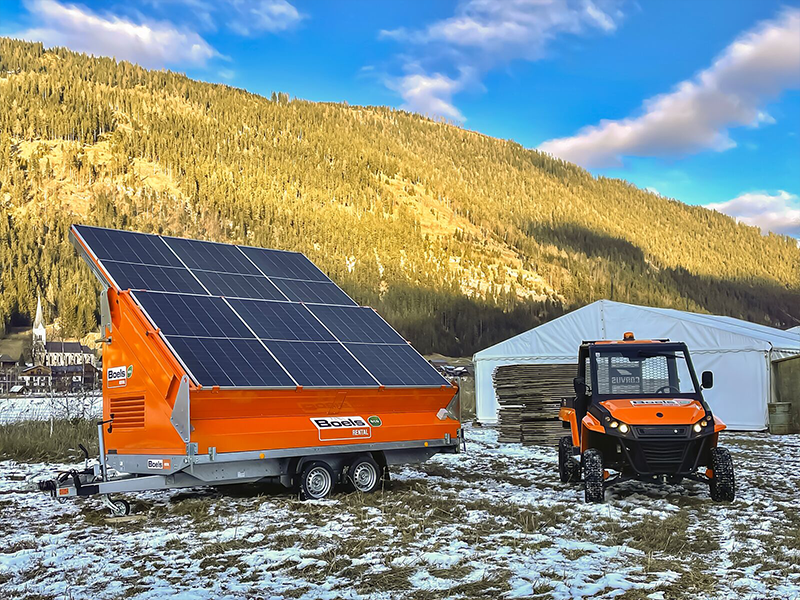
Hybrid generators for Zero Emission projects
Working in an environment with strict emission requirements? Hybrid generators offer a practical solution.
They combine a battery system with an efficient engine running on HVO fuel (Stage V). Adding solar panels further reduces fuel consumption.
Key benefits:
- Reduced emissions
- Lower fuel consumption
- Suitable for urban environments and Natura 2000 areas
A mobile solar station allows you to easily expand your solar capacity and meet ZE requirements.