
Less fossil fuel, more green energy. Generally speaking, that means a sharp increase in electricity consumption. And now the electricity grid is having trouble coping, you could be left with no power at all. So how can you still make sure your machines and building systems have enough power? Peak shaving is the solution for many. It uses an energy storage system, so you can spread out or ‘shave off’ the peaks in your energy consumption.
As a construction company, you need much less power during the night than during the day. That’s because early in the morning, when all machines start working and the heating or cooling in the site cabin or office is turned up a notch, power consumption shoots up. Then you might experience that the 3 x 250 ampere connection you want power from can’t give enough power to keep everything running during peak times. That’s when you get the message that due to grid congestion, it will be weeks or months before a heavier connection may be available.
This is where peak shaving comes into action. It literally help you to shave off the sharp peaks in power demand. The method most commonly used is a battery system with sufficient storage. You let the battery steadily recharge at night – in the (cheap) off-peak hours – because then the electricity grid can supply enough and only the camera security and emergency lighting are on at the building site. If you run into a power shortage at some point during the next working day, the battery system automatically kicks in and you won’t notice any grid congestion.
If you run into a power shortage, the battery system automatically kicks in and you won’t notice any grid congestion.
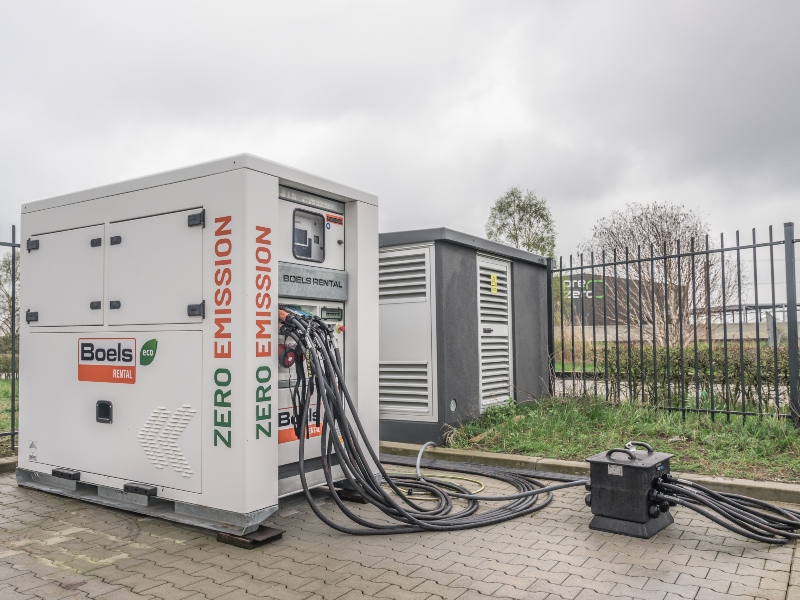
Power supply equipment
If you need temporary power supply, the best option usually is to rent a system. This can be a mobile or stationary generator, but these often still run on diesel or, at best, biofuel. Newer generators sometimes have a relatively clean Stage V diesel engine. Boels recently introduced a number of new ‘smart’ products, such as the hybrid 20kVA solar generator. It can be transported on a trailer behind your utility van and has a built-in lithium battery with a capacity of an impressive 30 kWh. The battery gets its power from six powerful solar panels with a maximum output of 3630 watts.
Boels also rents out various Energy Storage Systems (ESS). These range from portable battery packs with a capacity of 1600 or 2000 watts (for electric hand tools, for example) to battery packs and battery containers that can be moved with a forklift truck in capacities ranging from 45 to as much as 318 kVa (at 400 volts).
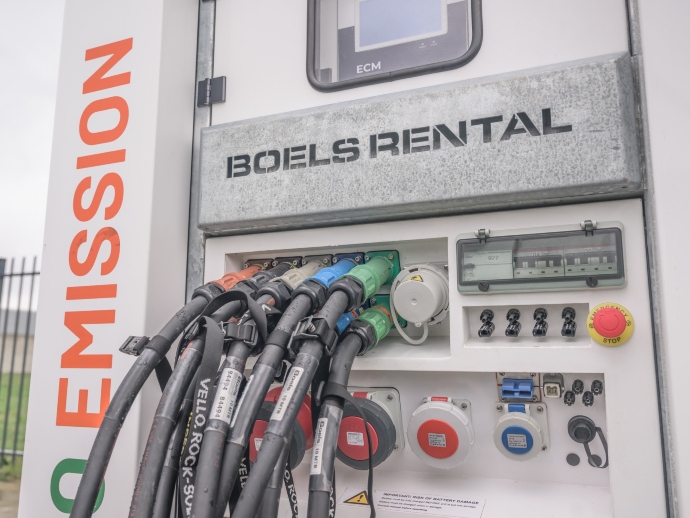
Good advice
Working with a temporary power supply is more complicated than it looks like at first glance. That’s why it is so important to get good advice beforehand, both for working safely and to keep costs as low as possible. Monitoring and control provide ideal support in this respect. Using all available data, it is immediately clear whether the energy demand is being met, whether every piece of machinery is working properly, and where potential problems may occur. This puts you in control of this tricky matter and, as an end user, provides you with the evidence to support your sustainability efforts